Site Design
SNN Electronic City Master Plan - How the Site Works
Building placement strategy
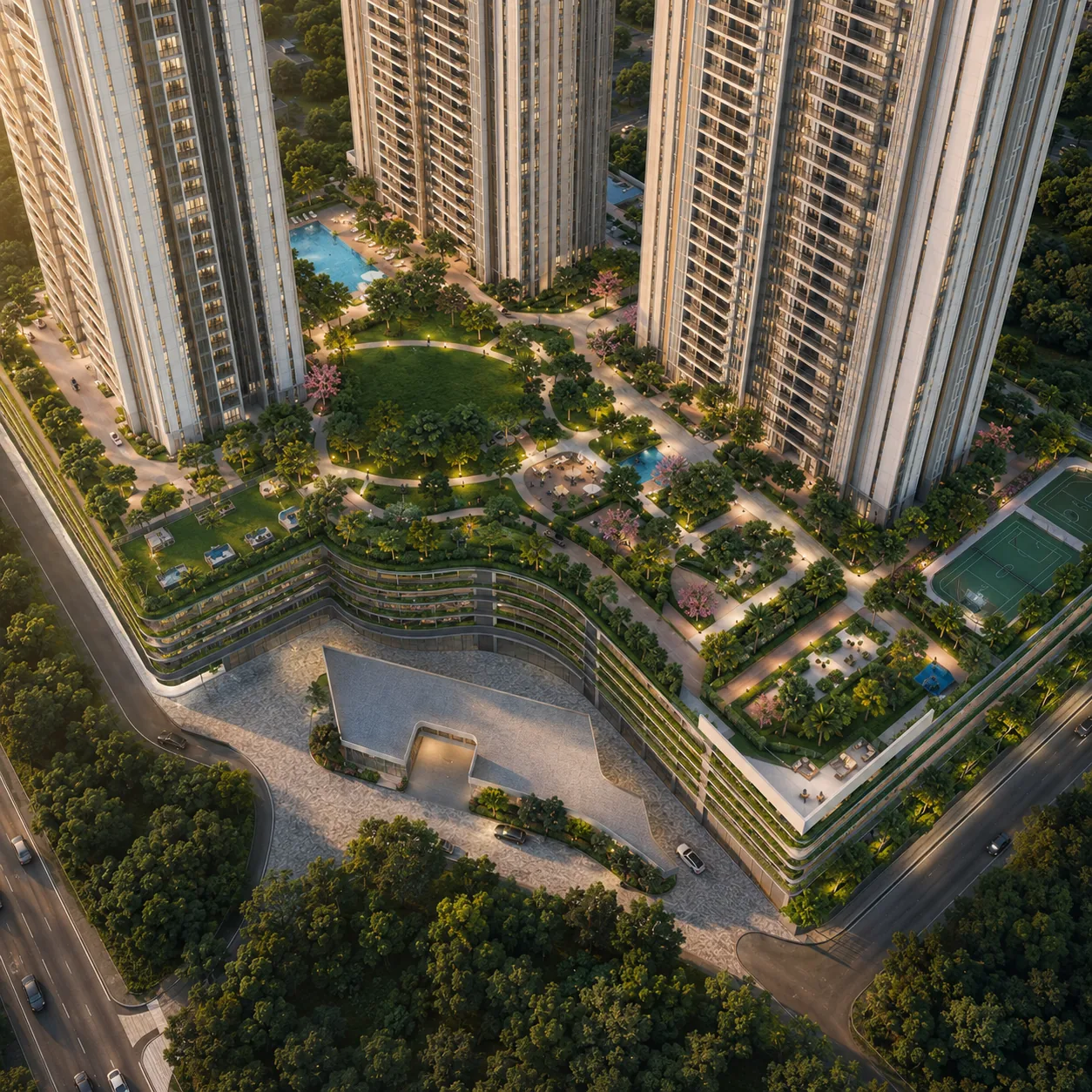
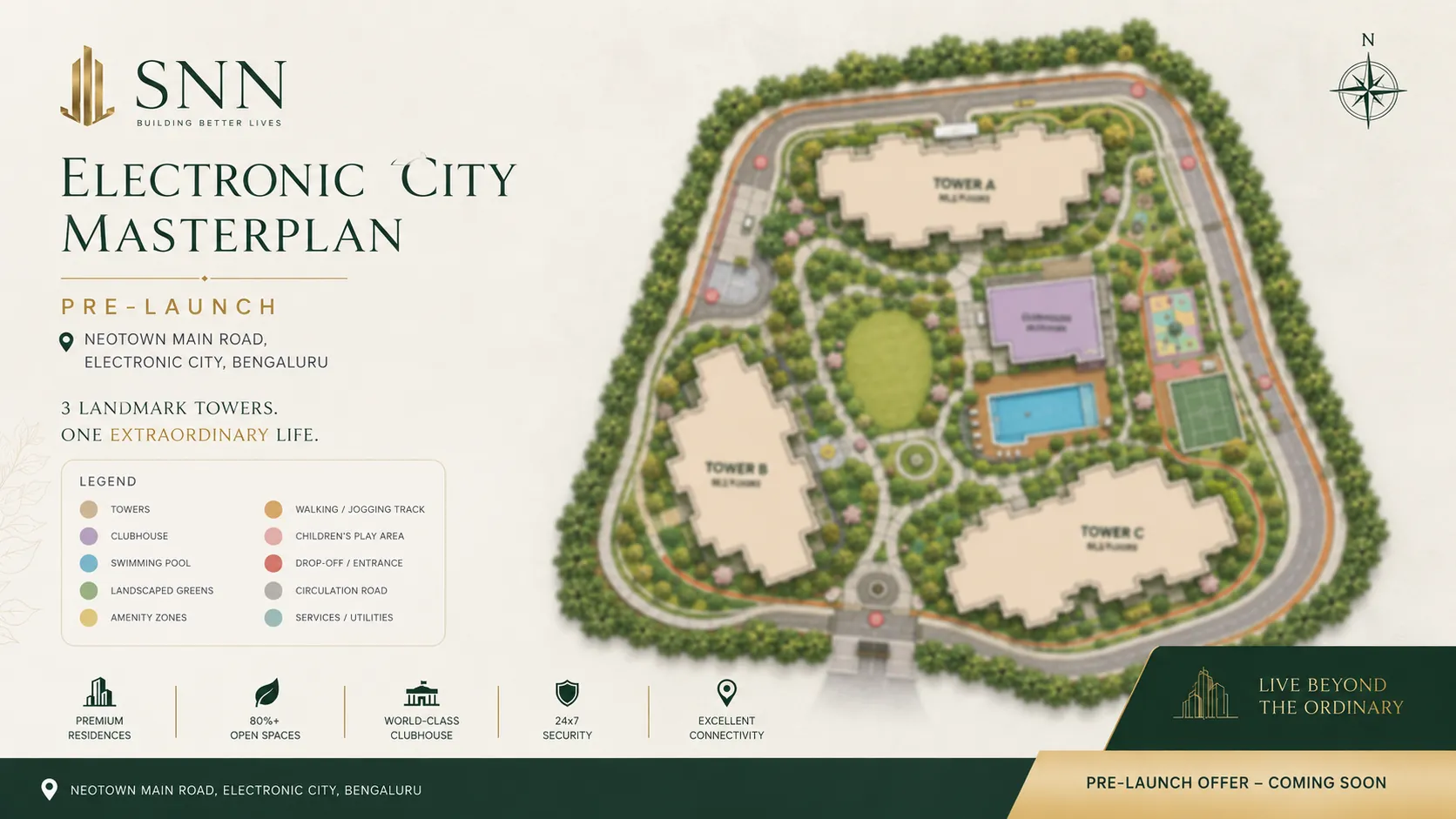
The three towers are arranged to balance privacy, views and open space. Spacing between towers is set so that habitable rooms are not in direct sightline of one another at close range, and orientation is tuned to capture prevailing breezes and the best long-distance views while managing afternoon heat gain on the western faces. Each tower lands on its own ground-level lobby and arrival point, so resident movement is distributed rather than funnelled through a single congested entrance. With 36 residential floors over a ground level and a modest number of apartments per floor, lift cores are sized for short wait times even at peak commuting hours.
Green belt and open space
Open space is the centrepiece of the plan rather than a leftover. The intent is a layered green environment: a tree-lined arrival avenue, central landscaped gardens between the towers, dedicated lawns for yoga and gatherings, shaded seating courts, and softscaped edges along the site boundary. Mature and fast-growing native species are favoured for shade and biodiversity, and the planting is designed to be irrigated substantially with treated water from the on-site sewage treatment plant, closing the water loop. Despite the high-rise massing, a resident at ground level experiences gardens and greenery rather than parked cars.
Road, circulation and pedestrian movement
Vehicular circulation is kept deliberately light at grade. Vehicles enter from Neotown Main Road into a controlled arrival court, descend to the three basement parking levels, and the surface road network is limited to what fire-tender access, service movement and resident drop-offs require. The pedestrian network knits the three towers to the clubhouse, the amenity decks and the gardens through shaded, step-free walkways, with a perimeter jogging and walking loop, rest points and exercise stations. Children's play areas are placed within sight of seating, and senior-citizen decks sit in quieter, shaded corners. Lighting is designed for safe after-dark use.
Below-ground and sustainability infrastructure
The three basement levels do far more than park cars: they house transformer and DG rooms, pumping and water-treatment plant, fire-fighting tanks and pump rooms, and the building services a 120-metre tower requires, with provision for EV charging. The plan integrates the environmental systems expected of a contemporary premium high-rise - a sewage treatment plant with treated-water reuse, rainwater harvesting, LED common-area lighting and efficient pumps and lifts, solar provision for common-services load, and segregated waste handling with organic composting at source.
Fire safety and tall-building systems
A ~120-metre residential tower is governed by stringent high-rise fire and life-safety norms. Each tower is planned with pressurised fire-fighting staircases, fire-rated lift lobbies, wet risers and sprinkler coverage, smoke detection and a fire-alarm system, and refuge floors at the intervals tall buildings require. Fire-tender access is a primary driver of the surface road layout, and the three basement levels carry their own ventilation, smoke-extraction and fire-suppression systems.
Phasing and what to confirm
Phase 1 delivers the three towers and 552 homes described here, with the amenity programme sized to serve this community so early residents are not left waiting on later phases. Because the project is pre-launch, the details reflect design intent rather than a sanctioned document. At booking and again on RERA registration, obtain the sanctioned plan and confirm the land area, tower and floor count, unit and per-floor count, committed open space and amenities versus future-phase reservations, parking allocation, setbacks, tower spacing and approved building height. See the amenities page for the full facility programme and the overview page for the project specification.