
Towers
3
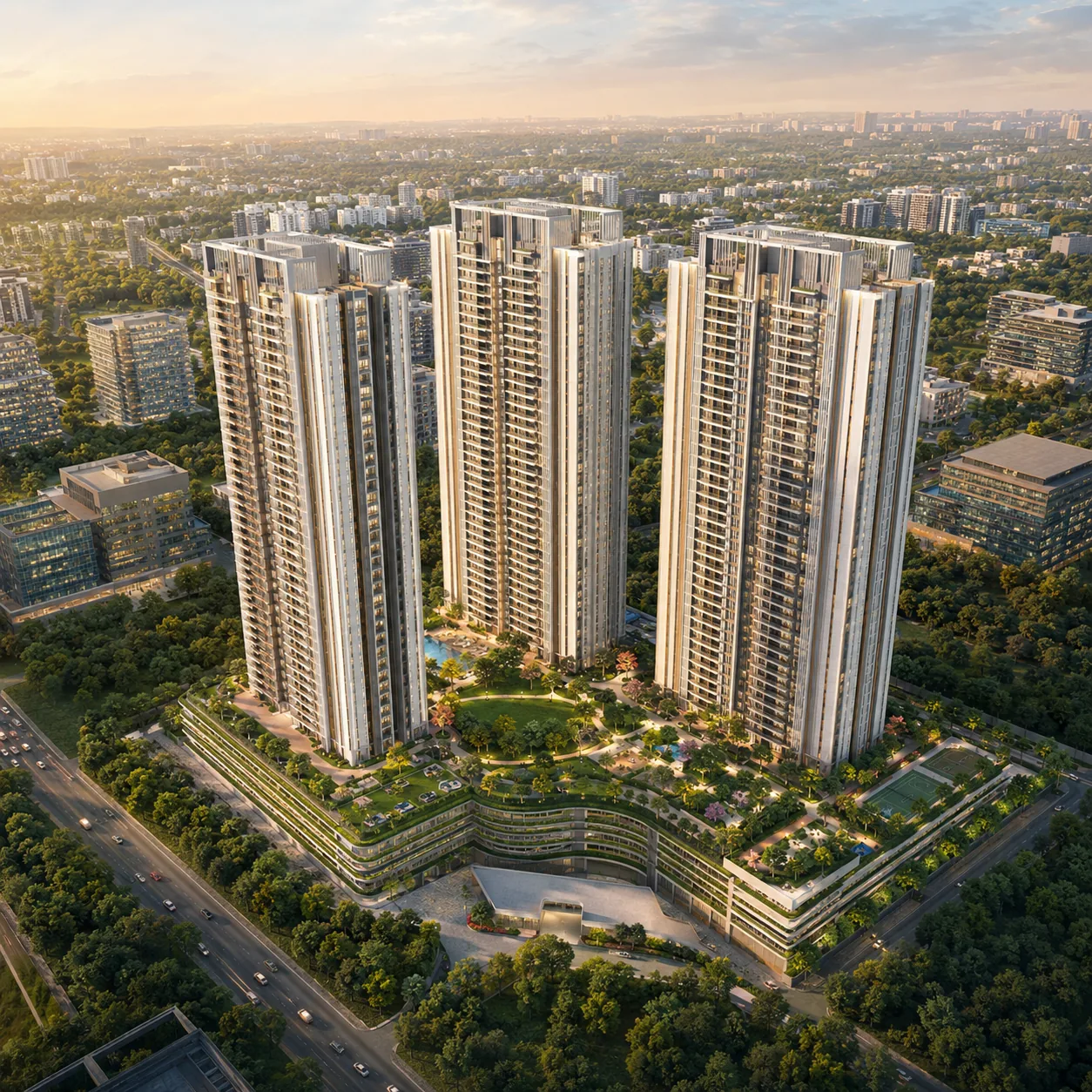
SNN Electronic City is a pre-launch residential high-rise development by SNN on Neotown Main Road, Electronic City, South Bengaluru. Phase 1 introduces three landmark towers built to a 3B + G + 36 configuration, rising to roughly 120 metres, together delivering 552 apartments in 2 and 3 BHK formats. This overview sets out what is being built, why, how it is specified, who is building it, and where it sits on the regulatory timeline. SNN Kannur Road adds a same-city project reference for buyers reading the overview through product format, buyer profile, and what still needs document-backed confirmation.
Towers
3
Configuration
3B + G + 36
Height
~120 m
Residences
552
Status
Pre-launch
Possession
Around 2030
At its core, SNN Electronic City is a vertical residential community designed for Electronic City's professional workforce. Rather than spreading homes across many low-rise blocks, the master plan concentrates them into three tall towers, each carrying 36 residential floors above a ground level and three basement parking levels - a deliberately compact ground footprint with generous land left for landscape and open space.
The case rests on three structural supports: the employment anchor of roughly 200 technology campuses including Infosys and Wipro; the connectivity step-change from the Yellow Line metro that became operational in August 2025; and a supply gap in quality high-rise stock in a locality dominated by older mid-rise apartments.
For the buyer, this combines a captive demand base, a traffic-proof transit spine, and room for a premium product to differentiate on height, views, density and brand.
Technical Specifications
Each tower is engineered as a tall building, which brings high-speed lifts, robust structural systems suited to the ~120-metre height, pressurised fire stairwells and a designed-for-views facade. The 3B + G + 36 structure means car parking is handled entirely below ground across three basement levels, keeping the surface free of vehicles.
The 2 BHK homes span an indicative 1,150 to 1,300 sqft of super built-up area; the 3 BHK homes span an indicative 1,550 to 1,850 sqft. Both configurations sit on the same 36-floor towers, so the view and floor-rise decision is somewhat independent of the size decision. Full sizing is on the floor plans page.
The design intent is height with restraint - three slender towers rather than a single bulky mass, giving the project a recognisable skyline silhouette while allowing daylight and air to move between the buildings. High floors capture panoramic views across the Electronic City greenbelt and skyline that lower-rise stock simply cannot offer. The full site logic is on the master plan page.
The project is planned with the now-standard premium features: a sewage treatment plant with treated-water reuse, rainwater harvesting, energy-efficient common-area lighting and pumping, solar provision for common-services load, and EV charging in the basements. The vertical form itself is land-efficient, preserving more permeable, planted surface per home.
Need the full launch picture?
Project Description
SNN Electronic City is best understood as a vertical neighbourhood for the workforce that powers India's largest IT cluster. The choice of three high-rise towers over a sprawling low-rise estate is the organising decision of the project; everything else - the amenity programme, the landscape, the parking strategy, the security model - flows from it. By concentrating 552 Phase 1 homes into three towers, the master plan shortens internal walking distances, simplifies vertical circulation, frees the ground plane for landscape, and gives the project a coherent skyline silhouette that doubles as an address marker.
The project is positioned for three overlapping audiences. The first is the dual-income IT professional household: a working couple within a 1 to 4 km radius of their workplace, the metro making the commute traffic-proof and the 2 BHK product the natural fit for a first owned home. The second is the established mid-career family: school-age children, a partner balancing office and remote work, a 3 BHK floor plan that flexes between living, office and guest use. The third is the yield-and-appreciation investor, treating Electronic City as one of Bengaluru's deepest rental pools and the new launch as the entry point into a metro-driven re-rating cycle that began in late 2025 and is widely expected to continue.
The overall product positioning is premium without being aspirational-only. The pricing band sits above the locality weighted average but mid-pack against branded new-launch quality stock, and the specification standard is calibrated to households earning Rs 35 to 80 LPA, who want a thoughtful home rather than an ultra-luxury statement. That positioning is consistent with SNN's broader portfolio, which has historically targeted the mid-to-upper segment and the occasional ultra-luxury venture rather than the entry-level mass market.
Technical Specification & Engineering
At roughly 120 metres each, the three towers of SNN Electronic City fall squarely into the high-rise category under Indian building regulations, which means the project is designed and engineered to a fundamentally different standard from the mid-rise apartment blocks that dominate older Electronic City stock. The structural system is engineered for the wind, seismic and load profile of a 36-storey residential tower, with concrete strength, reinforcement design and foundation depth all sized to that envelope rather than down-scaled from a typical 14-storey block.
Vertical transportation is among the most decisive engineering choices in a high-rise residence. Each tower's lift core is sized so that the wait time at peak commuting hours stays comfortable rather than punishing - high-speed gearless lifts with regenerative braking, a service lift for moves and freight, and a fire-protected staircase that doubles as the secondary egress route. The core is positioned so that the longest walk from a lift to an apartment entrance stays modest, which is the single most underrated determinant of how a tall building actually feels to live in.
The facade is a curtain of glazing, balcony bands and recessed stone-toned vertical fins, engineered to manage daylight, glare and solar heat gain without compromising the long view. UPVC or powder-coated aluminium windows with double glazing on the higher-exposure faces handle thermal performance, and balcony depths are sized to provide both usable outdoor space and a shading benefit for the rooms behind them. Mechanical, electrical and plumbing systems are routed through dedicated service shafts to keep the apartment ceilings clean and the future maintenance access straightforward, with concealed copper wiring, modular switchgear and provision for high-speed structured cabling baked into the base specification.
Regulatory, Sustainability & Buyer Guidance
At the pre-launch stage SNN Electronic City sits at a recognisable point on the regulatory journey. Karnataka RERA (K-RERA) registration is pending, which means the project cannot yet be formally marketed or sold under the RERA framework, and the RERA registration number is therefore not available. Prospective buyers should treat all published specifications, configurations, prices and timelines as design intent and verify each item against the K-RERA filing once registered. Beyond RERA, the sanctioned building plan, the title deed chain, the encumbrance certificate and the conversion and approvals stack should all be independently inspected, ideally by a property lawyer with experience in the South Bengaluru micro-market. Signature Regal keeps the wider Bengaluru search practical by tying the project story back to buyer fit, configuration needs, and the confidence required before a site visit.
The sustainability narrative is engineered into the project rather than added on as a marketing layer. The vertical built form is itself land-efficient, consuming less ground per home than a sprawling low-rise layout and preserving more of the site for permeable, planted surface. On top of that, the project is planned with an on-site sewage treatment plant that recycles waste water for landscape irrigation and flushing, rainwater harvesting across the site, energy-efficient LED common-area lighting and pumps, solar provision for common-services load, segregated waste management with on-site organic composting, and EV-charging conduit run through the basements. These systems translate directly into lower long-run running costs for owners and a genuinely lighter environmental footprint than older Electronic City stock can offer.
Pre-launch buyer guidance focuses on the diligence steps that genuinely matter. Confirm the carpet area against the super built-up figure used in the headline pricing. Confirm the floor-rise schedule, parking allocation, club membership and corpus charges in writing, alongside any subvention or possession-linked discount. Confirm the EOI refund terms and the payment schedule. Visit a delivered SNN community - SNN Raj Greenbay in Electronic City Phase 2 is the most directly relevant - to observe construction quality, landscape maturity and maintenance standard several years after handover. None of these steps replaces the RERA filing, but together they let a buyer enter a pre-launch project with clear eyes on the trade-offs.
SNN Electronic City is a pre-launch residential high-rise development by SNN on Neotown Main Road, Electronic City, South Bengaluru. Phase 1 introduces three towers built to a 3B + G + 36 configuration rising to roughly 120 metres, together delivering 552 apartments in 2 and 3 BHK formats.
Three forces make the case: India's largest IT employment hub of roughly 200 campuses, the connectivity step-change from the operational Yellow Line metro, and a supply gap in quality high-rise stock in a locality dominated by older mid-rise apartments.
Three towers, each a 3B + G + 36 structure - three basement parking levels, a ground level for lobbies, and 36 residential floors - rising to roughly 120 metres, with 552 units across 2 and 3 BHK formats.
The project is at the pre-launch stage and Karnataka RERA (K-RERA) registration is pending. Buyers should treat published specifications as indicative and verify the registration status on rera.karnataka.gov.in before any payment beyond a refundable expression of interest.
As a Phase 1 launch the horizon is multi-year; an indicative possession target is around 2030, to be confirmed against the sanctioned plan and the RERA filing once registered.
SNN, a Bengaluru developer building since 1994 and operating today as SNN Raj Corp, with around 12 million sqft delivered across roughly 40 projects, including SNN Raj Greenbay in Electronic City Phase 2 and the 40-floor SNN Clermont at Hebbal.